
Stop Trusting Your Gut—Start Using Data
In today’s fast-moving digital landscape, your gut instinct just isn’t good enough. Whether you’re running a small business or managing a growing enterprise, relying on memory, spreadsheets, or fragmented tools to manage customer relationships simply won’t cut it. If you want to scale effectively, deliver better customer experiences, and make smarter, more strategic decisions, you need a CRM.
Data Over Gut: Making Smarter Business Decisions
Business leaders often pride themselves on intuition. And while experience matters, making decisions based solely on gut feeling in today’s data-rich environment is risky at best.
A CRM gives you hard data to answer questions like:
- Who are our most valuable customers?
- Where are leads falling off in the funnel?
- What touchpoints are driving conversions?
- Which sales activities lead to closed deals?
- How long is our average sales cycle?
Armed with these insights, you’re not guessing, you’re optimizing. You can allocate resources more effectively, personalize your outreach, forecast sales with greater accuracy, and improve customer retention.
Better Collaboration, Better Results
A CRM doesn’t just help leadership. It aligns your marketing, sales, and customer service teams around the same source of truth. Everyone can see where a customer is in the journey, what actions have been taken, and what’s needed next. That kind of visibility drives accountability and improves the customer experience.
It’s Not Just for Big Companies
Think CRMs are only for big corporations? Think again. With affordable, scalable options available for businesses of all sizes, even small teams can gain big insights. In fact, a CRM often becomes the competitive edge that helps smaller businesses compete at a higher level.
Which CRM is Right for You?
Choosing the right CRM depends on your business size, goals, and the level of complexity you need. Fortunately, there’s no shortage of options—each offering different features, pricing, and integrations.
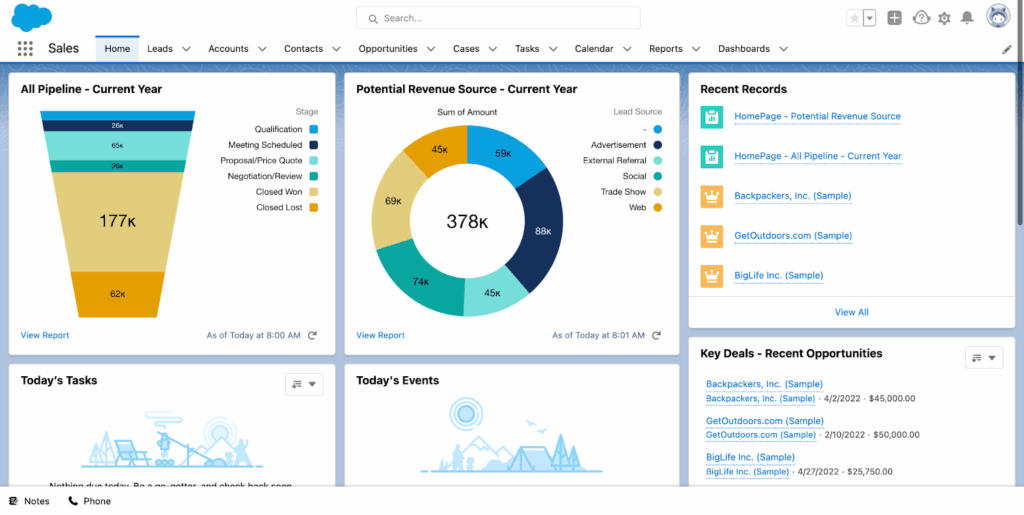
Here are a few solid choices to help you start narrowing it down:
Salesforce: A top choice for larger organizations, offering robust customization, powerful analytics, and scalable solutions for complex business needs.
Pipedrive: User-friendly and efficient, making it well-suited for sales teams that require a streamlined solution for pipeline management.
HubSpot CRM: Provides an intuitive interface along with a comprehensive suite of tools, including marketing automation and robust sales features.
Freshsales: A robust, feature-rich CRM with a free tier, making it an excellent choice for small businesses or those just getting started.
Bloomerang: Recognized for its intuitive interface and emphasis on donor retention, making it a strong choice for small to mid-sized nonprofits.
DonorPerfect: A reputable option, especially suited for smaller organizations, offering a reliable platform for donor management and fundraising.
The Bottom Line
No matter which CRM you choose, the key is consistent, strategic use. Its true value lies in clean data, team-wide adoption, and alignment with your business goals. Start simple, scale wisely, and let the data guide your decisions.
A CRM is no longer a “nice-to-have”—it’s essential. If you’re still relying on gut instinct, scattered spreadsheets, or disconnected tools, you’re not just missing opportunities—you’re falling behind.
Data is your most valuable asset. A CRM is how you put it to work.
Need help untangling your projects, or aligning them to a bigger picture?
Let’s talk about how The Walter Collective can help you move from chaos to clarity—while cultivating what’s next for your organization.